
A.M.M.A.A, which simply means mother, is a space mapping mother artists in Asia and their art practice. An initiative by Indian artist Ruchika Wason Singh, it seeks to document the different aspects of their art making and its intersection with motherhood and caregiving. It is geared towards documentation of experiences and creative expressions by mother-artists in contemporary visual and performing arts with a focus on the Asian region. The archive aims to build itself and function as a space for mother artists’ in Asia to make and claim, who persist in which commitment to create alongside or despite maternal and caregiving responsibilities.
The space was first conceived in the summer of 2016, when Ruchika Wason Singh conceptualized a place for mother artists, which could give visibility to women who had made the choice to commit to motherhood and art practice in their lives, but could not find opportunities to find visibility for their work. Her idea sprung from two points of departure. First was her own joyful experience of mothering, which brought along challenges of artistic activity and mobility. Second was the realization that much research has been done outside of Asia on the role of mothers and artists and the impact of motherhood on their art and life, however, a lacunae existed within the Asian region which needed attention and work.
The project started with a blog in June 2016 which launched an open call inviting artists of Asian origin living and creating in any Asian country as well as those living and creating anywhere outside of Asia. It sought to platform artists whose work was informed by the event of motherhood as well as artists whose experiences were not necessarily reflected in their work but which was nevertheless determined by the realities of motherhood to understand what creation after motherhood entailed. The project visualized itself as an archive where the submitted material could be purposed into an overview of art practice of mother artists from different phases of their lives. The project specially sought to focus on mother artists who had been working consistently for long periods of time yet for reasons related to caregiving or otherwise had not found themselves in the ‘mainstream’ of professional circuits.
The initial steps received mixed responses from friends and colleagues all around. There was surprise, curiosity, scepticism, denial, acceptance and warm welcome. To pleasant surprise, there was also interest in the project from mother artists who either had ancestral Asian roots or were of non-Asian origin, but had spent considerable time of their lives in Asia and this furthered the responsibility and possibility of making A.M.M.A.A. more diverse and inclusive. Eventually the project expanded itself into other avenues that could record and share information about and work of mother artists. The project is centred on three pillars - mapping, visibility and mobility; it works with these ideas to construct a more inclusive and equitable art world. This focus addressed a critical gap in the art-ecosystem which rarely provided support systems, institutional or otherwise, to artists who are also mothers and is insufficient in acknowledging or removing the challenges originating from balancing caregiving and studio practice. This has been reflected in its organisation of child inclusive participation platforms and short duration residency programmes, promoting research through survey questionnaires and prioritising the documentation of lived experiences of artist mothers.
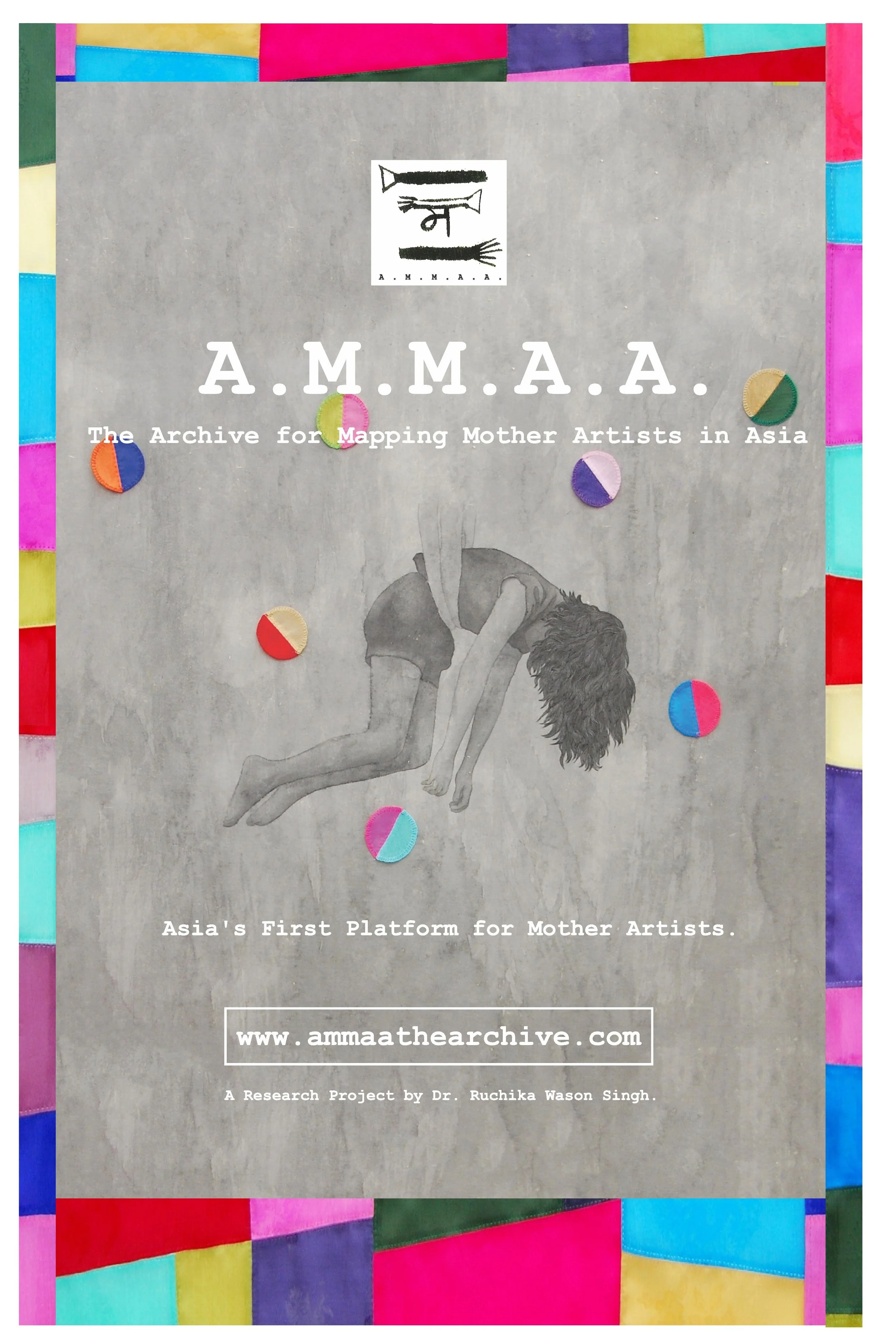
The A.M.M.A.A. Website Launch Poster ( April 15, 2017 )
There have been challenges along the way as well. Working with a conceptual frame as multitudinal as Asia has meant differences in language and accessibility issues due to geographical distances have occasionally been limiting factors at the outset, but have always created possibilities for further invention, dialogue and most importantly diversification of the artists reached and the material collected. As the prime aim of the project is mapping, the heterogeneity of people, their work and the medium in which our interactions with them are conducted, recorded and publicized, has made A.M.M.A.A. a plurivocal space and given the opportunities to everyone involved in the project to share, learn and build solidarities around motherhood and creativity in spite of a multiplicity of differences. Another step towards inclusiveness has been an effort to welcome mother artists who although not of Asian descent have spent a considerable part of their lives in Asia and therefore have pertinent insights to offer. As it moves ahead, the project targets to sustain its research on the central themes of caregiving and creativity whilst expanding the scope of factors that intersect with these processes and shape them. Our existing and intended endeavours include online archives and blogs, curated exhibitions, collaborative projects and residencies and publications and interviews.